


Foods That Support Methylation: A UK Nutrition Guide
The best foods for methylation: folate, B12, riboflavin, choline and betaine explained, with the MTHFR link, what to avoid and a simple day of eating.
 By Francesco Gatti · Published 23 September 2026
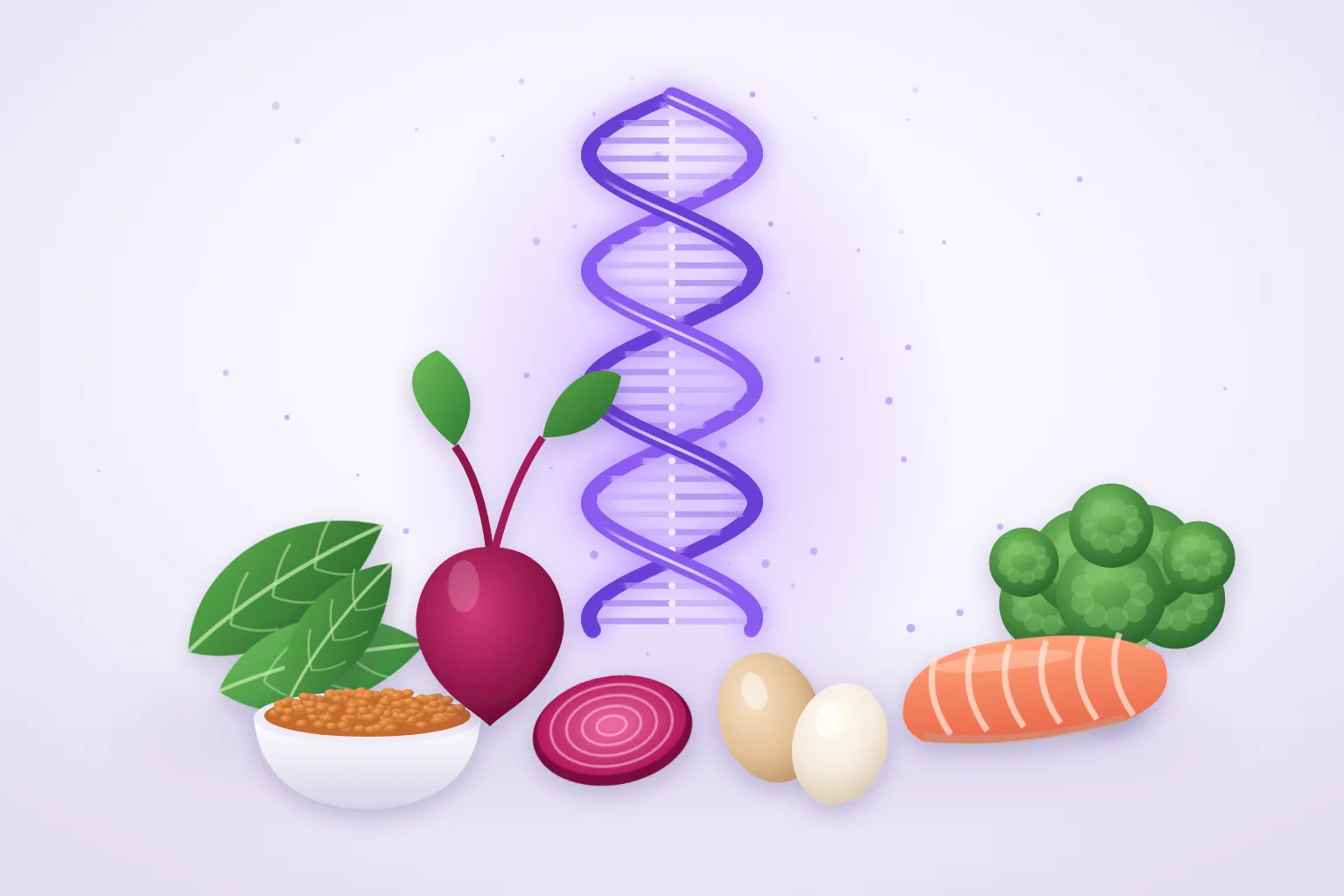
Methylation runs on nutrients. Every one of the billions of methyl groups your body moves around each second has to come from somewhere, and most of that supply starts on your plate. Here is what the science says about eating to support methylation, and which foods do the heavy lifting.
Why diet matters for methylation
Methylation is the process of attaching a small chemical tag, a methyl group, to DNA, proteins, neurotransmitters and other molecules. It helps switch genes on and off, clears homocysteine from the blood, builds neurotransmitters such as serotonin and dopamine, and supports detoxification in the liver. If you are new to the topic, our guide on what methylation is covers the basics.
The engine behind all of this is the methionine–folate cycle. It recycles methyl groups using a small set of vitamins and nutrients as fuel and cofactors. Your body cannot make most of them itself, so if you run short of any one of them the whole cycle slows down.
Your body’s universal methyl donor is a molecule called SAMe (S-adenosylmethionine). Making and recycling SAMe depends on folate, vitamin B12, vitamin B6, riboflavin (B2), choline, betaine and the amino acid methionine. Magnesium and zinc act as supporting cofactors.
The key methylation nutrients
Each of these nutrients has a specific job in the cycle. Low levels of any one of them are linked with raised homocysteine, the most widely used blood marker of poor methylation.
Converted by the MTHFR enzyme into 5-MTHF, the form that hands a methyl group to homocysteine to regenerate methionine.
Required by methionine synthase to move the methyl group from folate to homocysteine. Without it, folate becomes “trapped” and unusable.
The MTHFR enzyme depends on a riboflavin-derived cofactor (FAD). This matters particularly for people with the MTHFR C677T variant.
Drives the transsulfuration pathway, which converts excess homocysteine into cysteine and the antioxidant glutathione.
Betaine, made from choline or eaten directly, donates methyl groups through a second pathway that doesn’t depend on folate, mainly in the liver.
An essential amino acid found in protein foods. It is the direct precursor of SAMe.
The best foods for methylation
You don’t need exotic superfoods. Most methylation nutrients are found in ordinary whole foods, and a varied diet covers the majority of people. These foods give you the most for each portion:
| Food | Key nutrients | Why it helps |
|---|---|---|
| Leafy greens (spinach, kale, rocket) | Folate, betaine, magnesium | The word “folate” comes from the Latin for leaf. Spinach is also one of the richer vegetable sources of betaine. |
| Eggs | Choline, B12, riboflavin, methionine | One large egg yolk provides roughly a third of the daily adequate intake for choline. |
| Liver (beef, lamb, chicken) | B12, folate, riboflavin, choline | The most nutrient-dense methylation food there is. Avoid it during pregnancy because of its very high vitamin A content. |
| Lentils, chickpeas & beans | Folate, B6, magnesium | A single portion of cooked lentils can cover most of an adult’s daily folate needs. |
| Beetroot | Betaine, folate | Betaine was first identified in sugar beet, which is where its name comes from. |
| Oily fish (salmon, sardines, mackerel) | B12, B6, methionine | Also provides omega-3s, which some research suggests work alongside B vitamins to support healthy homocysteine levels. |
| Asparagus & broccoli | Folate | Among the richest green-vegetable folate sources. Steam them rather than boiling to keep more of it. |
| Dairy & mushrooms | Riboflavin | Milk and yoghurt are the main riboflavin sources in the UK diet. Mushrooms are a useful plant-based option. |
| Wholegrains & quinoa | Betaine, B6, magnesium | Wheat bran, wheatgerm and quinoa are some of the most concentrated dietary sources of betaine. |
| Nuts & seeds | Magnesium, zinc, B6 | Pumpkin seeds, almonds and sunflower seeds supply the mineral cofactors many methylation enzymes rely on. |
Folate vs folic acid: what’s the difference?
Folate is the natural form found in food. Folic acid is the synthetic form used in most supplements and fortified foods such as breakfast cereals. From the end of 2026, the UK also requires folic acid to be added to non-wholemeal wheat flour.
Folic acid is stable and well absorbed, but it has to go through several conversion steps before the body can use it for methylation, and one of those steps depends on the MTHFR enzyme. Some people carry common variants in the MTHFR gene, especially C677T, that reduce how efficiently this enzyme works. For them, food folate and methylfolate (5-MTHF) supplements are often discussed as alternatives. We explain the variants in detail in MTHFR C677T and A1298C explained.
Folic acid supplements are still the NHS recommendation before and during early pregnancy, whatever your MTHFR status. Speak to your GP or midwife before changing any supplement you’ve been advised to take.
Riboflavin and the MTHFR connection
This is one of the most interesting findings in methylation nutrition. The MTHFR enzyme made by the C677T variant is less stable and tends to lose its riboflavin-based cofactor. Research from Ulster University found that in people with two copies of the variant (the “TT” genotype), extra riboflavin helped stabilise the enzyme, lowered homocysteine, and in several trials was linked with lower blood pressure.
In practice, that makes riboflavin-rich foods such as milk, yoghurt, eggs, almonds and mushrooms particularly relevant if a test shows you carry this variant.
What works against methylation?
Getting enough of the right nutrients is only half of the picture. Some everyday habits increase the demand for methyl groups or interfere with how the nutrients are absorbed:
- Heavy alcohol intake reduces folate absorption and interferes with the enzymes that recycle methionine.
- Overcooking vegetables. Folate is water-soluble and sensitive to heat, so boiling greens can lose a large share of it into the water. Steaming, stir-frying or eating them raw keeps more.
- Some medications, including metformin and long-term acid-reducing drugs (PPIs), can lower B12 absorption over time. Methotrexate works directly against folate metabolism.
- Strict plant-based diets without B12. Vitamin B12 is found almost entirely in animal foods, so vegans need fortified foods or a supplement.
- Smoking is consistently associated with lower folate levels and higher homocysteine.
A simple methylation-friendly day of eating
- Breakfast: eggs and greens
Two eggs scrambled with a handful of wilted spinach on wholegrain toast gives you choline, B12, riboflavin, folate and betaine in one plate.
- Lunch: lentil and beetroot salad
Cooked lentils, roasted beetroot, rocket, pumpkin seeds and a little feta cover folate, betaine, B6, magnesium and zinc.
- Snack: yoghurt and almonds
A riboflavin-rich option, which is especially useful if you carry the MTHFR C677T variant.
- Dinner: salmon with steamed broccoli and quinoa
B12, B6 and methionine from the fish, folate from lightly cooked broccoli, and betaine and magnesium from the quinoa.
Should you test before changing your diet?
A balanced diet built on the foods above is a sensible choice for almost everyone, so you don’t need a test to start. Where testing helps is personalisation. A methylation DNA test shows whether you carry variants in genes such as MTHFR, MTR, MTRR and COMT that change how your body handles specific nutrients. It can tell you, for example, whether riboflavin or choline deserves extra attention in your case, or whether methylfolate might suit you better than folic acid.
If you’re weighing that up, our side-by-side comparison of UK methylation tests covers price, the number of genes analysed and the quality of reports. Our round-up of the best methylation tests in the UK for 2026 highlights our top picks. For more on what these tests actually measure, see what are DNA methylation markers?
Frequently asked questions
Can diet alone fix poor methylation?
For many people, correcting a shortfall in folate, B12, B6 or riboflavin through diet is enough to bring homocysteine back into a healthy range. People with significant genetic variants, absorption problems or medical conditions may need targeted supplementation, and that should be guided by a healthcare professional.
Is methylfolate better than folic acid?
Methylfolate is already in the active form, so it doesn’t depend on the MTHFR enzyme. That makes it a popular choice for people with MTHFR variants. Both forms raise folate levels effectively in most people. Folic acid remains the form recommended by the NHS for pregnancy planning.
Can you have too much of a methylation nutrient?
Yes. High-dose supplements, particularly vitamin B6 taken long term, can cause side effects, and very high folic acid intake can mask a B12 deficiency. Food sources carry very little risk. Supplements should follow UK guidance or professional advice.
Which foods are highest in betaine?
Wheat bran and wheatgerm, quinoa, spinach and beetroot are among the richest dietary sources of betaine.
This article is for general information only and is not medical advice. If you have symptoms, a diagnosed condition or take regular medication, speak to your GP or a registered dietitian before making significant changes to your diet or supplements.
 ★ Editor's Top Pick
StrideDNA Optimal Health
110 genes · 46 reports · UK lab

We receive affiliate commissions from these providers. Disclosure →